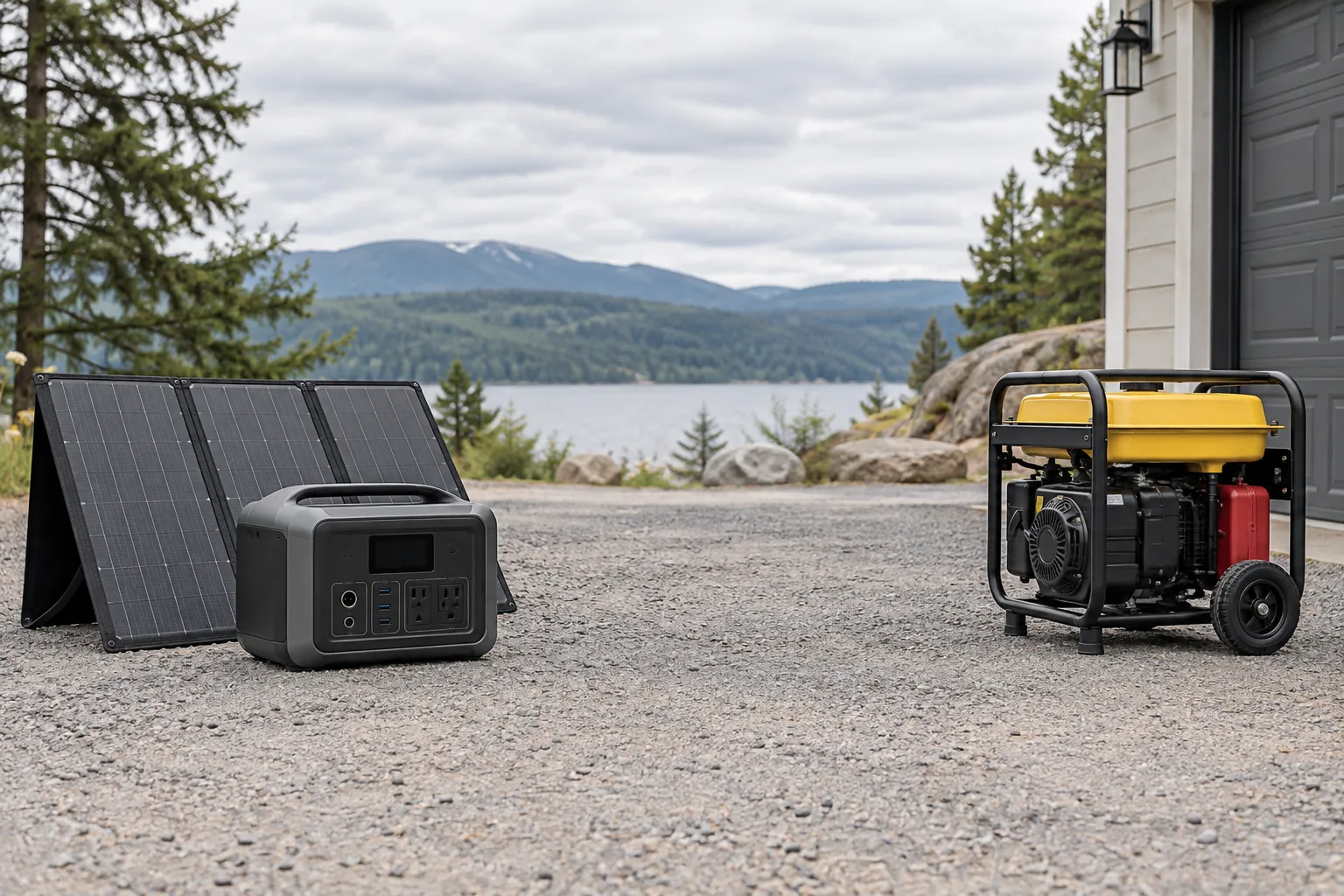
The decision in one sentence
Choose a battery-based system when quiet, indoor-compatible backup for modest loads, portability and multiple recharge paths matter. Consider a gas generator when you need sustained high output for long periods and have a safe outdoor operating and refueling plan. Many households use different tools for different layers of backup.
Side-by-side decision table
| Factor | Battery-based solar generator | Gas generator |
|---|---|---|
| Local emissions | No exhaust at the point of use. | Combustion exhaust; outdoor operation is essential. |
| Noise | Usually limited to electronics and cooling fans. | Engine and exhaust noise; model-dependent. |
| Runtime | Limited by battery Wh; can extend with recharge. | Can continue while fuel and maintenance allow. |
| Refill / recharge | Wall, vehicle or solar input depending on the model. | Fuel supply, safe storage and engine servicing. |
| High-wattage loads | Bound by inverter output and battery drain. | Often suited to sustained higher loads, subject to model rating. |
| Indoor use | Only where the manufacturer allows and with clear vents. | Never indoors or in enclosed spaces. |
| Maintenance | Battery storage and firmware/inspection guidance. | Fuel, oil, filters, exercise and engine maintenance. |
Match the system to the outage
Battery-first scenarios
- Router, phone and laptop continuity
- Quiet overnight loads
- Apartment or indoor-adjacent use where no exhaust is acceptable
- Short outage bridge with wall or solar recharge
- Portable RV and campsite electronics
Engine-first scenarios
- Long outage with limited solar or grid recharge
- Sustained high-power loads that exceed a portable battery system
- A prepared outdoor location with proper transfer equipment
- A household that can store and rotate fuel safely
Questions to answer before buying
- 01Which exact loads must run, and what are their continuous and startup watts?
- 02How many hours or days must the first charge last?
- 03Can you recharge from the grid, a vehicle or solar during the outage?
- 04Will the system feed individual appliances or an approved transfer setup?
- 05Where can the equipment be operated, stored and ventilated safely?
FAQ
Is a solar generator the same as a portable power station?
In consumer product listings, “solar generator” often refers to a battery power station paired with solar charging. Read the battery, inverter and solar-input specifications rather than relying on the label.
Which is cheaper to run?
It depends on fuel prices, charging source, battery life, maintenance and the load. Avoid a price claim without a specific system, local fuel cost and time horizon.
Can a battery station replace a gas generator for a whole house?
Usually not as a blanket statement. Compare circuits, voltage, output, battery capacity, recharge and approved transfer equipment for the exact system.
Planning guide · United States context · Updated September 20, 2026. Product lines, firmware, port standards and manufacturer limits change; verify the current manual before buying or connecting a load.